
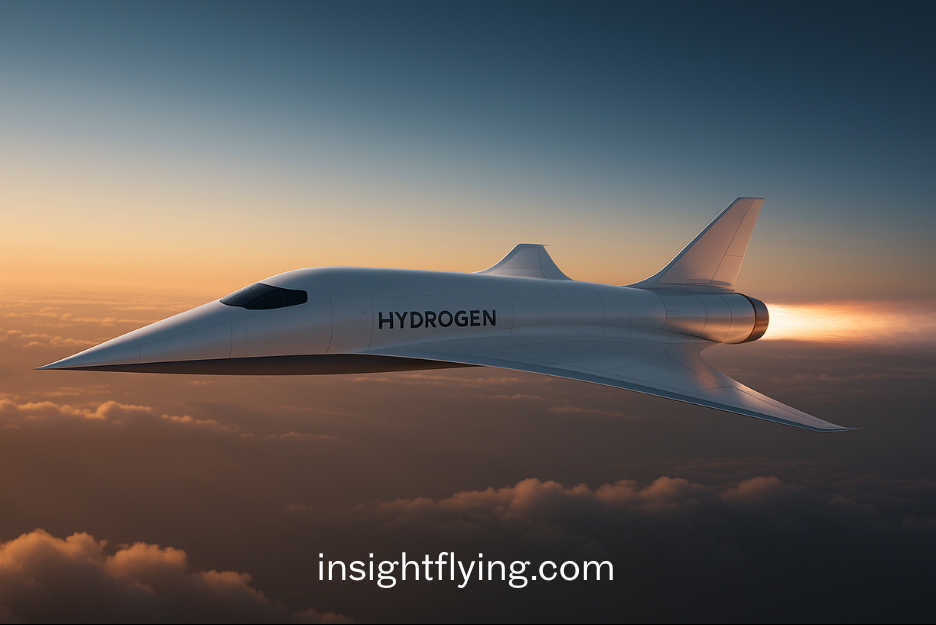
เครื่องบินความเร็วเหนือเสียงขับเคลื่อนด้วยไฮโดรเจน – อนาคตแห่งการเดินทางความเร็วเหนือจินตนาการ
Supersonic and hypersonic flight represent the next great leap in aviation technology. While traditional supersonic jets, such as the Concorde, reached speeds of Mach 2, new research aims far beyond — toward aircraft capable of flying at Mach 12, or twelve times the speed of sound. That’s nearly 14,800 kilometers per hour, fast enough to travel from Bangkok to New York in less than an hour.
การบินด้วยความเร็วเหนือเสียงและเหนือไฮเปอร์โซนิก ถือเป็นก้าวกระโดดครั้งต่อไปของเทคโนโลยีการบิน เครื่องบินความเร็วเหนือเสียงแบบเดิม เช่น Concorde เคยทำความเร็วได้ถึง Mach 2 แต่ในอนาคตอันใกล้นี้ นักวิจัยตั้งเป้าที่จะพัฒนาเครื่องบินที่สามารถทำความเร็วได้ถึง Mach 12 หรือ 12 เท่าของความเร็วเสียง ซึ่งเท่ากับประมาณ 14,800 กิโลเมตรต่อชั่วโมง — เร็วพอที่จะเดินทางจากกรุงเทพฯ ไปนิวยอร์กได้ในเวลาไม่ถึงหนึ่งชั่วโมง
🚀 Speed and Definition
- Supersonic: Faster than Mach 1 (the speed of sound, ~1,235 km/h at sea level).
- Hypersonic: Generally defined as Mach 5 and above.
- Mach 12 means approximately 14,800 km/h — extremely fast, in the high hypersonic regime.
🔥 Why Hydrogen?
ทำไมต้องเป็นไฮโดรเจน?
Hydrogen is emerging as the most promising fuel for high-speed flight. It offers the highest energy per unit mass of any chemical fuel, meaning it delivers tremendous thrust while keeping the aircraft light. Moreover, hydrogen can be used to cool the airframe and engine before combustion — a crucial factor when dealing with the extreme heat generated by hypersonic speeds. When it burns, it produces only water vapor, making it an environmentally friendly option for future aviation.
ไฮโดรเจนกำลังถูกมองว่าเป็นเชื้อเพลิงแห่งอนาคตสำหรับการบินความเร็วสูง เพราะมี พลังงานต่อหน่วยน้ำหนักสูงที่สุด ในบรรดาเชื้อเพลิงทั้งหมด ทำให้สามารถให้แรงขับสูงโดยมีน้ำหนักเบา นอกจากนี้ ไฮโดรเจนยังสามารถใช้ในการ ระบายความร้อนของตัวเครื่องและเครื่องยนต์ ก่อนจุดระเบิด ซึ่งเป็นสิ่งสำคัญเมื่อเครื่องบินต้องเผชิญกับความร้อนมหาศาลจากความเร็วสูงระดับนี้ อีกทั้งเมื่อเผาไหม้ ไฮโดรเจนจะปล่อยเพียง ไอน้ำ ทำให้เป็นเชื้อเพลิงที่เป็นมิตรต่อสิ่งแวดล้อม
✈️ Real-World Examples
ตัวอย่างการทดลองในโลกจริง
One of the most notable achievements in this field was NASA’s X-43A, an unmanned experimental aircraft that used a hydrogen-fueled scramjet engine to reach Mach 9.6 in 2004. Another example is DARPA’s HTV-2, designed to explore flight at up to Mach 20. Though the mission faced challenges, it demonstrated the potential of hypersonic travel.
ตัวอย่างที่โดดเด่นในด้านนี้คือเครื่องบินทดลอง NASA X-43A ที่ใช้เครื่องยนต์ Scramjet ขับเคลื่อนด้วยไฮโดรเจน ทำความเร็วได้ถึง Mach 9.6 ในปี 2004 และโครงการของ DARPA HTV-2 ซึ่งถูกออกแบบให้สำรวจการบินที่ความเร็วสูงสุดถึง Mach 20 แม้การทดลองจะประสบปัญหาทางเทคนิค แต่ก็แสดงให้เห็นถึงศักยภาพอันมหาศาลของเทคโนโลยีนี้
🌍 The Promise and the Challenges
ศักยภาพและความท้าทาย
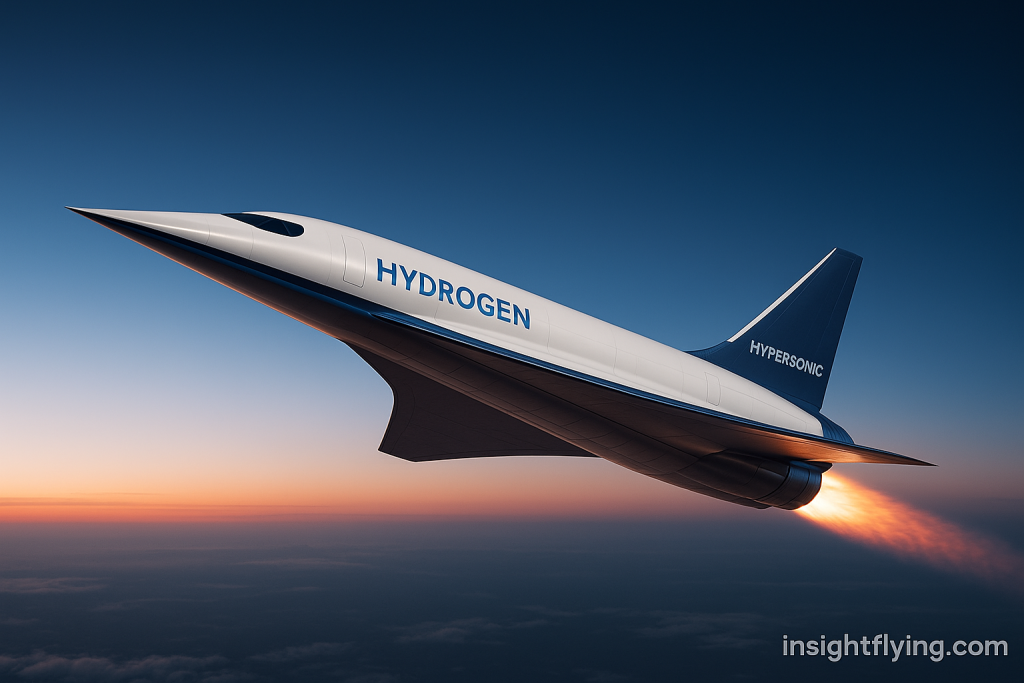
Hydrogen-powered hypersonic flight could redefine global transportation — enabling intercontinental travel in under an hour, rapid response missions, and even reusable space vehicles. However, major challenges remain: the extreme heat at Mach 12 requires advanced materials, cryogenic fuel storage adds complexity, and safety and cost must be addressed before such technology becomes commercially viable.
เครื่องบินไฮเปอร์โซนิกขับเคลื่อนด้วยไฮโดรเจนมีศักยภาพที่จะเปลี่ยนโลกของการคมนาคม ทั้ง การเดินทางข้ามทวีปในเวลาน้อยกว่าหนึ่งชั่วโมง, ภารกิจตอบสนองฉุกเฉิน, และ ยานปล่อยสู่อวกาศแบบใช้ซ้ำได้ อย่างไรก็ตาม ยังมีความท้าทายหลายด้าน เช่น ความร้อนสูงระดับสุดขีด, ระบบเก็บเชื้อเพลิงแบบไครโอเจนิก, และ ต้นทุนรวมถึงความปลอดภัย ที่ต้องได้รับการพัฒนาให้สมบูรณ์ก่อนนำมาใช้งานจริง
🧭 The Road Ahead
เส้นทางสู่อนาคต
From research labs to aerospace companies, the race toward hydrogen-fueled hypersonic flight is accelerating. Projects like Reaction Engines’ SABRE (UK) aim to create hybrid jet-rocket systems that could take off from runways and reach space. If successful, the next generation of aircraft might make the world truly smaller — connecting continents in minutes, sustainably powered by hydrogen.
จากห้องทดลองสู่ภาคอุตสาหกรรมอวกาศ การแข่งขันเพื่อพัฒนาเครื่องบินไฮเปอร์โซนิกขับเคลื่อนด้วยไฮโดรเจนกำลังเกิดขึ้นทั่วโลก เช่น โครงการ SABRE ของบริษัท Reaction Engines (สหราชอาณาจักร) ที่กำลังสร้างระบบเครื่องยนต์ลูกผสม Jet–Rocket ซึ่งสามารถบินจากรันเวย์และขึ้นสู่อวกาศได้ หากประสบความสำเร็จ ยุคใหม่ของการเดินทางจะทำให้โลกเล็กลงอย่างแท้จริง และขับเคลื่อนด้วยพลังสะอาดจากไฮโดรเจน
🔗 References / แหล่งอ้างอิง
- NASA X-43A Scramjet Project – https://www.nasa.gov/centers/armstrong
- DARPA Hypersonic Technology Vehicle – https://www.darpa.mil/
- Reaction Engines SABRE – https://wikipdeia.org/reactionengines

ลองดู JIAPU 21V พัดลมไร้สาย 12 นิ้ว พัดลมแบต ไฟ LED ไร้สาย พัดลม พัดลมพกพาไร้สาย พัดลมแคมป์ปิ้ง ในราคา ฿948 – ฿1,482 ที่ Shopee https://s.shopee.co.th/6fg7tStt9R
เครื่องกรองน้ำ COWAY ลดราคาพิเศษ
 |
|
หนังสือการบิน ทางลัดสู่ความเข้าใจที่นำไปใช้งานจริง


 |
|
 |
|
 |
|
787 A350 accident Airbus aircraft airmanship airworthiness aviation Aviation SMS B787 become a captain become a pilot Boeing captain CAT Crisis emergency engine fatigue flight safety FRMS go-around Indigo interview pilot qualified pilot safety Safety Management System SMS student pilot swiss cheese tail strike TCAS technology training travel tips turbulence weather การจัดการความปลอดภัย การบิน การสอบสัมภาษณ์ ความปลอดภัย นักบิน สอบนักบิน เรียนจากข่าว